
Forklift crane hook attachment with 500kg capacity, rotatable drum design and safety locking device for converting standard forklifts into mobile lifting equipment, made from iron construction with 6kg net weight


Forklift crane hook attachment with 500kg capacity, rotatable drum design and safety locking device for converting standard forklifts into mobile lifting equipment, made from iron construction with 6kg net weight
500kg capacity forklift crane hook attachment with rotatable drum and safety locking device

This specialised forklift crane hook attachment provides industrial facilities with a practical solution for converting standard forklift equipment into mobile lifting apparatus. Engineered specifically for integration with existing forklift systems, the attachment enables secure load handling without requiring dedicated crane infrastructure. The rotatable drum design coupled with safety locking mechanisms addresses common workplace requirements for versatile load positioning while maintaining safety protocols. With its 500kg capacity rating and iron construction, this equipment bridges the gap between traditional forklift operations and specialised lifting applications.
Features and Construction

The forklift crane hook incorporates several design elements specifically engineered for industrial lifting applications. Its construction prioritises functionality within standard forklift operating parameters while adding crane-like capabilities.
Material and Build
Constructed from iron, this crane hook attachment provides the structural integrity necessary for industrial lifting operations. The material choice reflects standard industry practices for lifting equipment subjected to regular mechanical stress. At 6kg net weight, the design balances durability with practical handling considerations for installation and removal from forklift equipment.
Size and Practical Fit
With its adjustable installation system, the crane hook accommodates various forklift fork configurations. The design specifically engineers compatibility rather than universal fit, requiring appropriate capacity matching between the 500kg hook rating and the host forklift's capabilities. The physical dimensions optimise for typical forklift fork spacing while maintaining operational clearance.
Uses and Placement
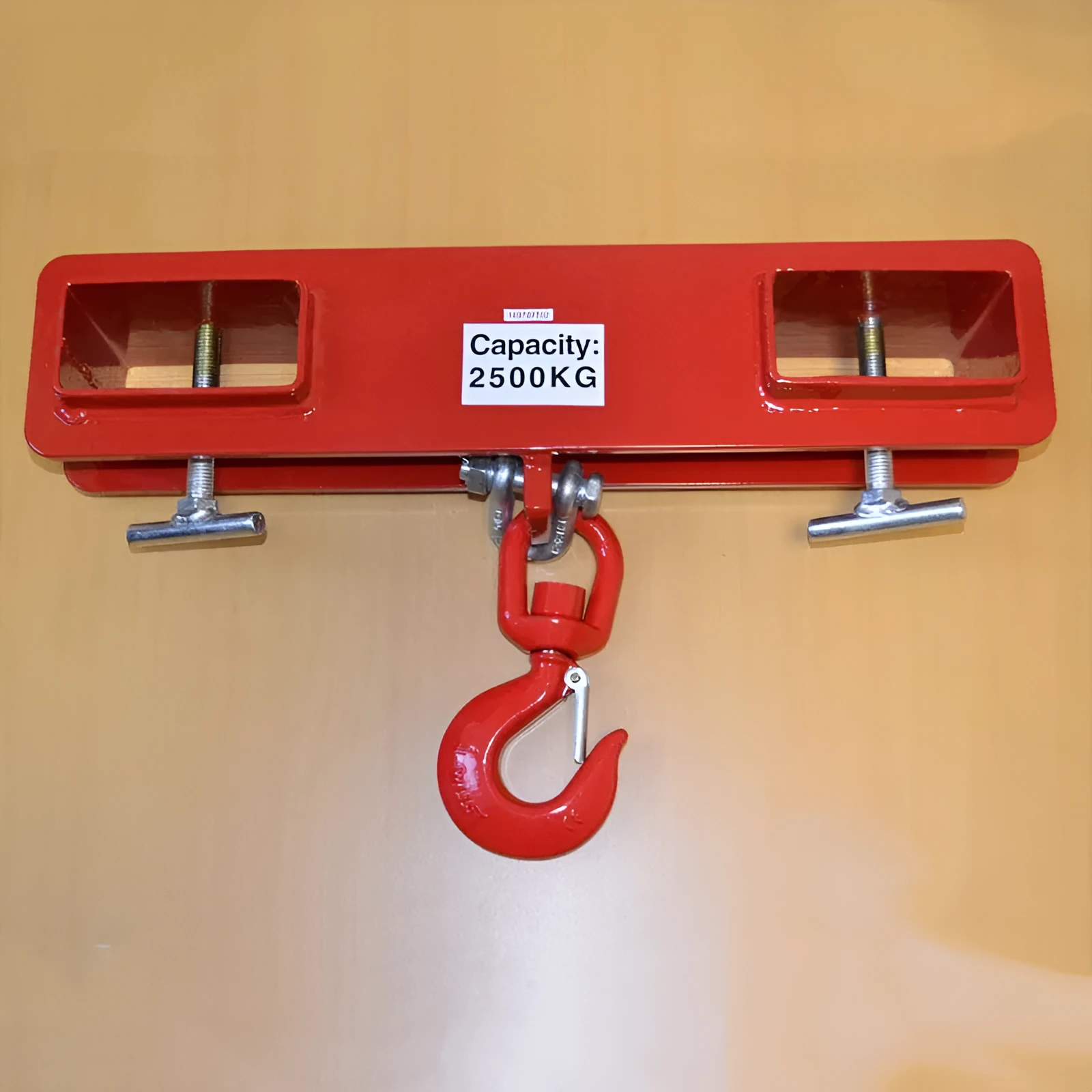
This attachment transforms standard forklift functionality, expanding equipment utilisation beyond conventional pallet handling operations.
Event or Professional Use
In industrial settings, the crane hook enables forklift operators to handle suspended loads, positioning materials in manufacturing processes, warehouse organisation, or maintenance operations. The rotatable drum design proves particularly useful for precise load orientation when placing components in assembly operations or when navigating loads through confined spaces where traditional forklift approaches prove impractical.
Everyday Home Use
While primarily designed for industrial applications, this equipment could serve smaller operations requiring occasional lifting capabilities without dedicated crane infrastructure. Facilities with existing forklift equipment benefit from the enhanced functionality without significant additional investment in specialised lifting equipment.
Benefits and Buying Value

The crane hook attachment extends equipment functionality while addressing practical considerations for industrial operations.
Reuse and Low Maintenance
Constructed from iron with mechanical rather than electronic components, the design emphasises durability and straightforward maintenance. The attachment integrates with existing forklift systems rather than requiring separate operating infrastructure, maximising equipment utilisation across multiple applications. Regular inspection of locking mechanisms and attachment points represents the primary maintenance consideration.
Why Choose This Product
This crane hook attachment provides a practical solution for facilities requiring occasional lifting capabilities without justifying dedicated crane equipment. The 500kg capacity addresses common industrial requirements while the safety locking mechanisms and rotatable design enhance operational versatility. The product's value emerges from its ability to extend existing forklift functionality rather than requiring separate equipment investment.
