Zinc Sheet Copper Sheet Electrode Assembly Material for Fruit Battery Science Experiment, Educational DIY Chemistry Lab Kit with Positive and Negative Electrodes, A Colour Option


Zinc Sheet Copper Sheet Electrode Assembly Material for Fruit Battery Science Experiment, Educational DIY Chemistry Lab Kit with Positive and Negative Electrodes, A Colour Option
Zinc and Copper Sheets for Fruit Battery Electrode Assembly Science Experiment
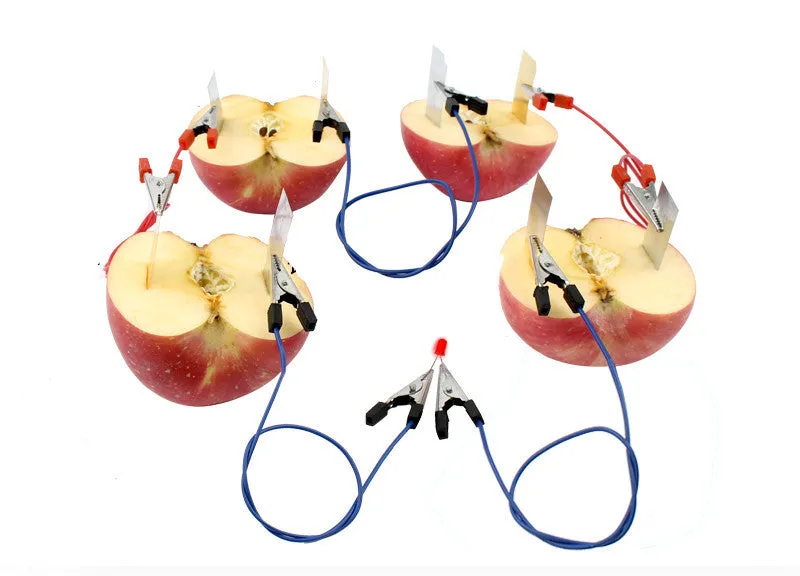
This zinc and copper sheet set is designed to provide the core electrode materials needed for building a fruit battery in educational science experiments. It solves the practical problem of sourcing the correct metal types for demonstrating electrochemical reactions, especially in classroom or home lab settings. The kit includes both a zinc sheet and a copper sheet, allowing you to create a simple working battery using common fruits. The experiment helps students understand key concepts in chemistry and electricity, such as electrode reactivity and current flow. The set is straightforward to use, with clear instructions for correct connection to avoid common mistakes.
Features and Construction
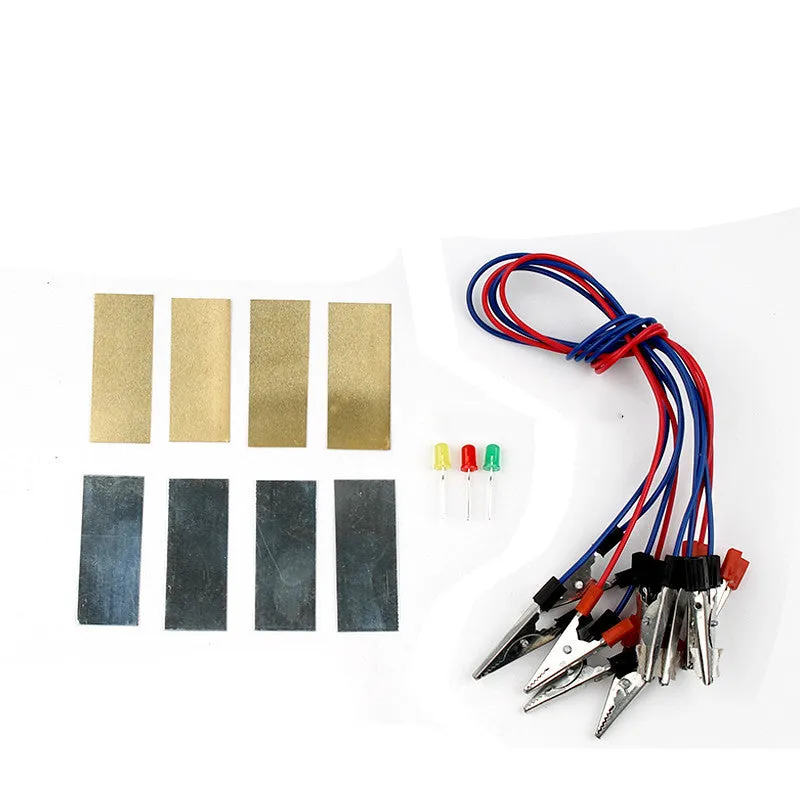
This electrode assembly material is built around two distinct metal sheets, each chosen for its specific role in the electrochemical process. The construction is simple and functional, focused on educational use.
Zinc Sheet as Negative Electrode
The zinc sheet serves as the negative electrode in the fruit battery. In the experiment, zinc, being the more active metal, undergoes an oxidation reaction. This loss of electrons creates the flow of current through the circuit. The zinc electrode is essential for initiating the chemical reaction that powers the light-emitting diode.
Copper Sheet as Positive Electrode
The copper sheet acts as the positive electrode. Copper is less reactive than zinc, so it accepts electrons from the external circuit. This difference in reactivity between the two metals is what drives the generation of electrical current. The copper electrode completes the cell and allows the LED to light up when properly connected.
Size and Practical Fit
No specific dimensions for the sheets are provided in the source text. The set is intended for standard fruit battery experiments and can be inserted into fruits such as lemons, potatoes, or apples. The sheets are of a size suitable for use with alligator clips and for placement into fruit without touching each other.
Uses and Placement
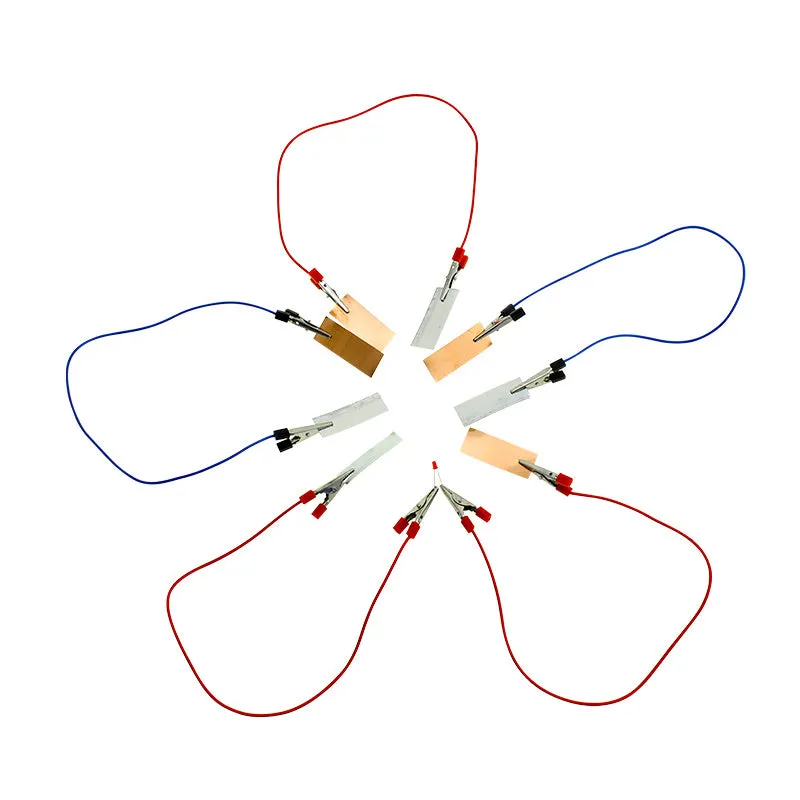
This electrode kit is specifically designed for educational science experiments. It is best used in controlled environments where students can observe the principles of electrochemistry.
Classroom or Home Lab Use
The set is ideal for school science lessons or home chemistry projects. It allows students to build a simple battery and test the effect of different fruit types on voltage. The experiment reinforces learning about oxidation, reduction, and electrical circuits.
Experiment Precautions
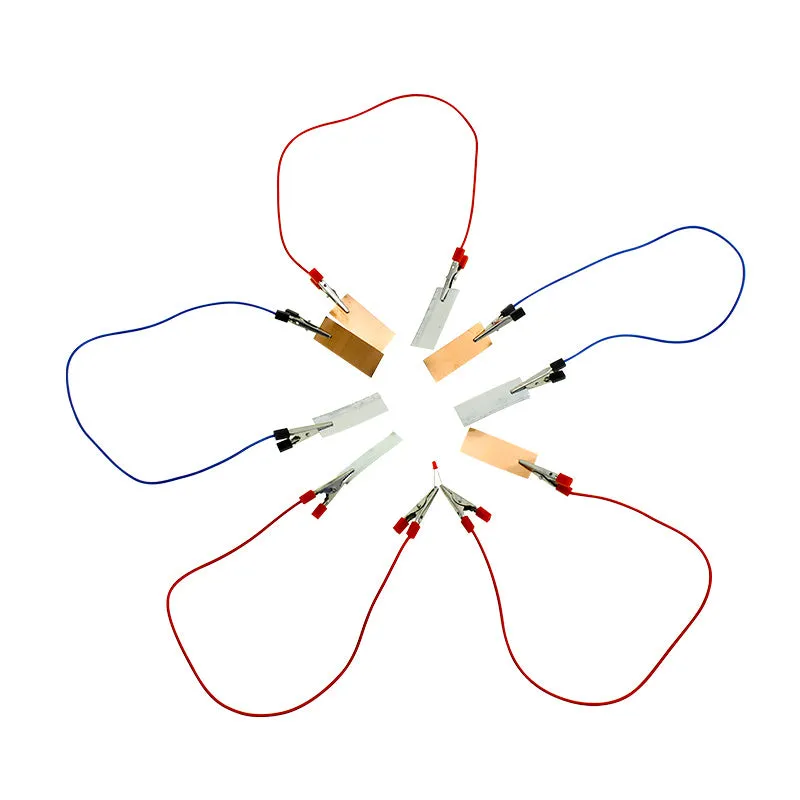
To ensure success, the two metal pieces must have a certain distance and cannot touch each other inside the fruit. Additionally, two pieces of metal on a single wire cannot be placed in the same fruit. The alligator clips connected to the diode must also not touch each other, as this would short the circuit.
Benefits and Buying Value
This set offers a direct, practical way to conduct a fundamental science experiment. Its value lies in its simplicity and educational focus.
Reusable and Low Maintenance
The zinc and copper sheets can be reused multiple times if cleaned and stored correctly. They require no maintenance beyond wiping dry after use. This makes the set a cost-effective resource for repeated demonstrations or student practice.
Why Choose This Product
If you need a straightforward, no-frills electrode pair for fruit battery experiments, this set provides exactly that. It avoids unnecessary complexity and focuses on the core chemistry concept. The clear distinction between the negative zinc and positive copper electrodes supports accurate teaching.