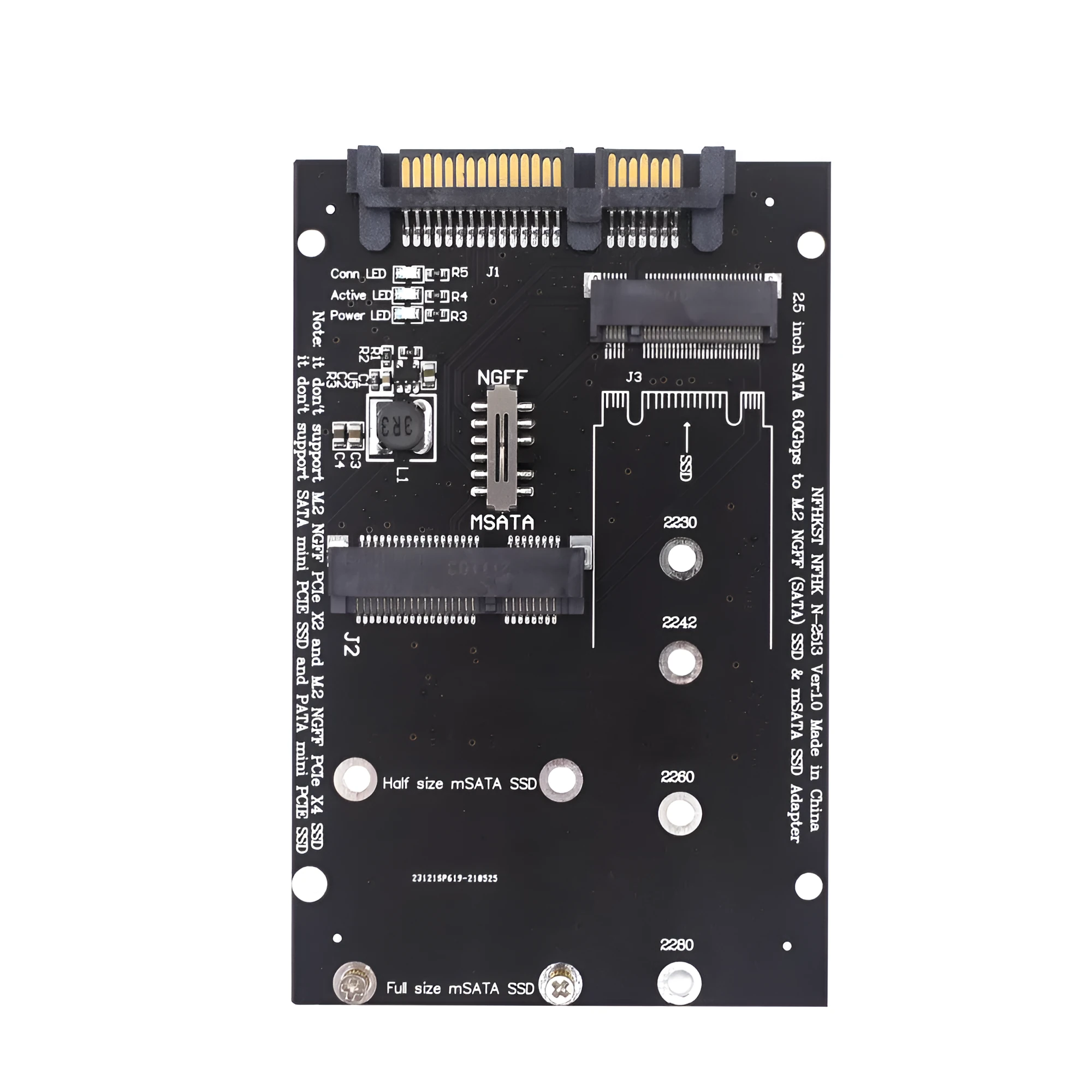
SATA3 to M2 NGFF MSATA SSD conversion card adapter board for upgrading older computers with 2.5-inch SATA drive bays to M.2 SATA or NGFF SATA solid state drives, available in black or blue colour


SATA3 to M2 NGFF MSATA SSD conversion card adapter board for upgrading older computers with 2.5-inch SATA drive bays to M.2 SATA or NGFF SATA solid state drives, available in black or blue colour
SATA3 to M.2 NGFF MSATA SSD Conversion Adapter Card for Computer Drive Bay Upgrades
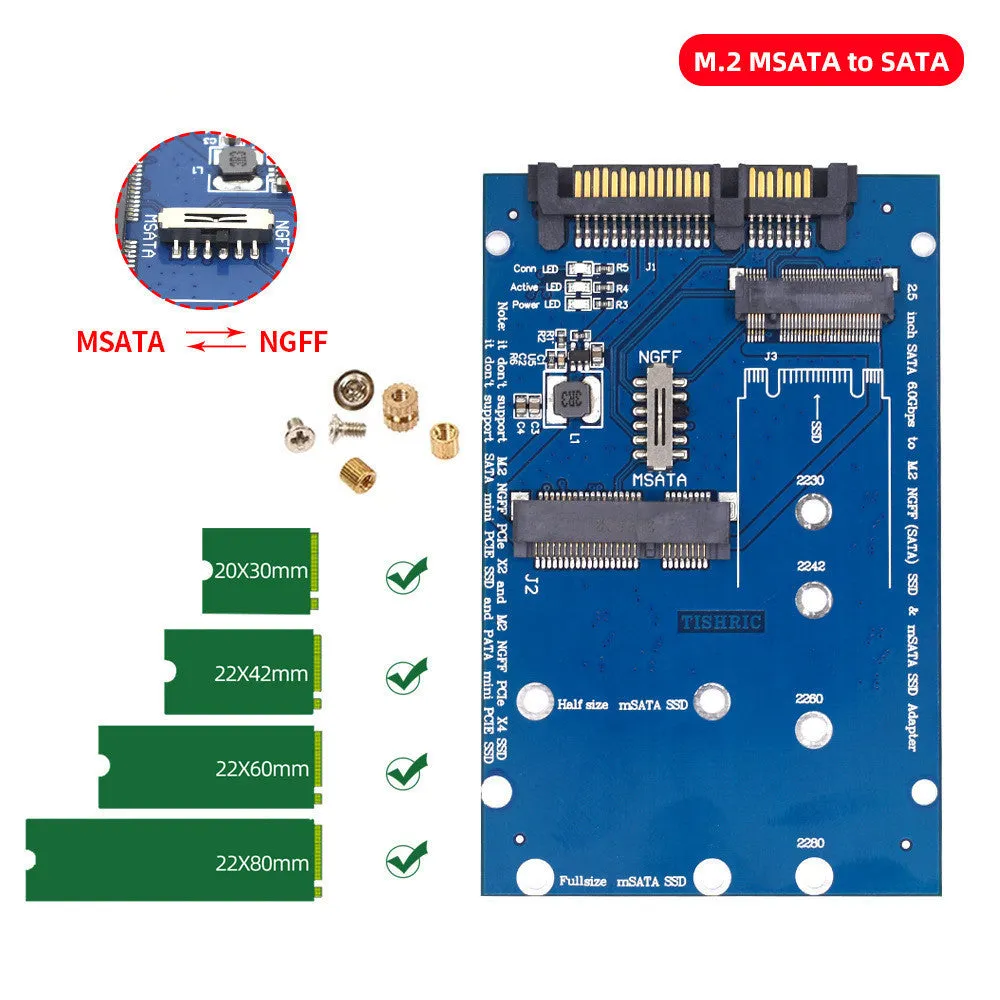
This conversion adapter card provides a practical solution for computer owners looking to upgrade older systems with 2.5-inch SATA drive bays to accommodate modern M.2 NGFF SATA solid state drives. By converting the interface from traditional SATA III to the more compact M.2 format, you can take advantage of newer SSD technology without requiring extensive system modifications. The adapter maintains SATA3 signal standards throughout the conversion process, ensuring compatibility with both M.2 SATA and NGFF SATA protocols commonly found in contemporary solid state drives.
Features and Construction

The adapter card features a purpose-built design specifically for converting between SATA III interfaces and M.2 NGFF formats. Its construction focuses on maintaining signal integrity while providing a secure physical connection between the different drive form factors.
Material and Build
Constructed using a standard printed circuit board with precision-etched copper traces, the adapter incorporates gold-plated connectors at both interface points. These connectors ensure reliable electrical contact and resist corrosion over time. The board's layout follows conventional SATA III specifications while accommodating the physical requirements of M.2 SSD mounting.
Size and Practical Fit
The adapter card maintains dimensions compatible with standard 2.5-inch drive bay installations, allowing it to occupy the same physical space as traditional hard drives or SSDs. Its compact design enables installation in both desktop computer drive cages and laptop 2.5-inch bays where space may be limited. The conversion circuitry adds minimal height to the overall assembly when paired with an M.2 SSD.
Uses and Placement
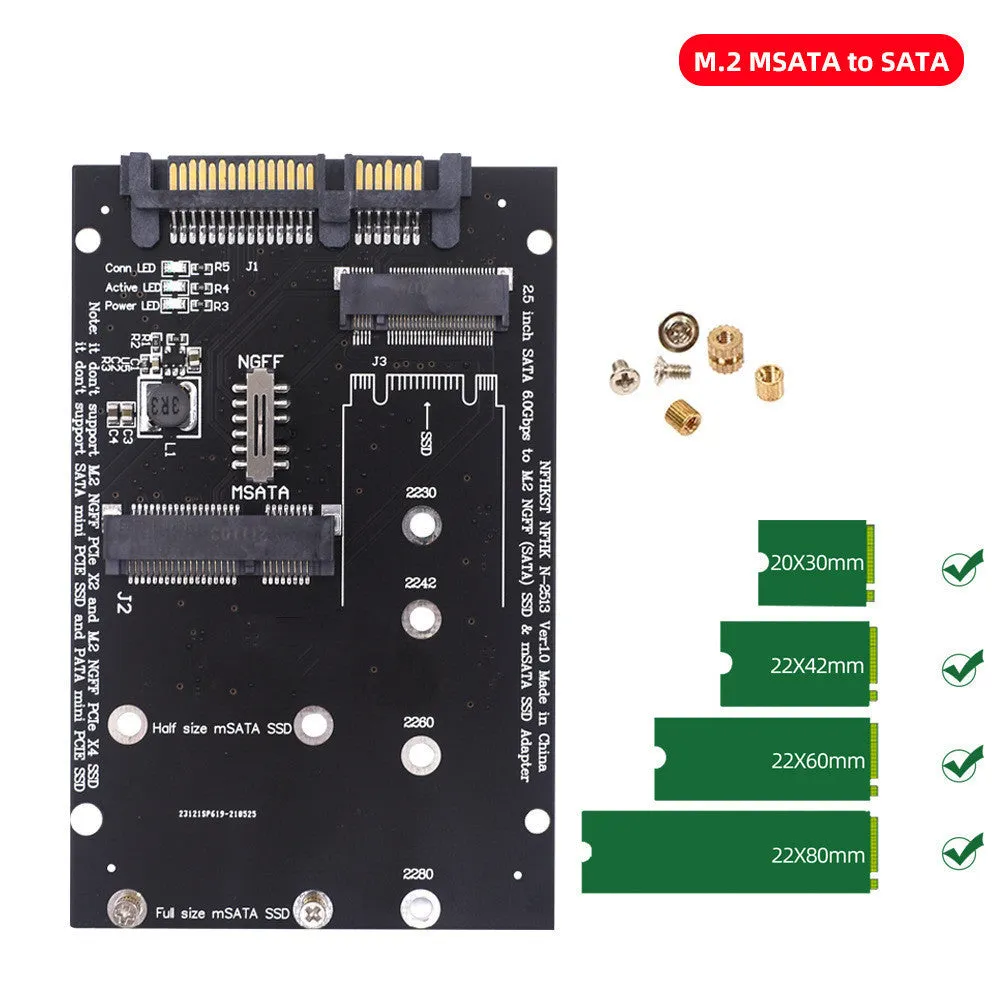
This adapter serves multiple upgrade scenarios for computer systems that still have functional SATA III interfaces but lack native M.2 support. It bridges the gap between older system architectures and newer storage technologies.
Event or Professional Use
In professional computing environments where system upgrades must be cost-effective, this adapter allows IT departments to extend the useful life of existing hardware. Older workstations, point-of-sale systems, and industrial computers with 2.5-inch SATA bays can be upgraded with faster M.2 SATA SSDs without requiring complete system replacement. This approach maintains hardware investment while improving storage performance.
Everyday Home Use
For home computer users with older desktops or laptops, this adapter enables storage upgrades that would otherwise require new motherboard purchases. Gaming PCs, media centres, and general-purpose computers benefit from SSD speed improvements while using existing SATA III connections. The adapter's simple installation process makes it accessible to users comfortable with basic computer hardware upgrades.
Benefits and Buying Value

Choosing this adapter provides specific advantages for upgrading computer storage while working within existing system constraints. Its value lies in practical functionality rather than unnecessary features.
Reuse and Low Maintenance
The adapter promotes hardware reuse by allowing older systems to accept modern SSD technology. There are no moving parts in the adapter itself, resulting in minimal maintenance requirements. The passive design means no additional power connections or driver installations are necessary beyond what the connected SSD requires.
Why Choose This Product
This conversion adapter stands out for its straightforward approach to interface conversion without unnecessary complexity. Available in both black and blue colour options, it provides visual choices while maintaining identical functionality. The inclusion of anti-static packaging demonstrates attention to component protection during shipping and storage, reducing the risk of electrostatic damage before installation.