
Diamond thermal conductivity tester for gem identification, second generation black metal and engineering plastic construction, 135x40x23 mm portable size, 66g lightweight battery-powered device for hardness testing


Diamond thermal conductivity tester for gem identification, second generation black metal and engineering plastic construction, 135x40x23 mm portable size, 66g lightweight battery-powered device for hardness testing
Second Generation Portable Diamond Thermal Conductivity Meter for Gem Identification
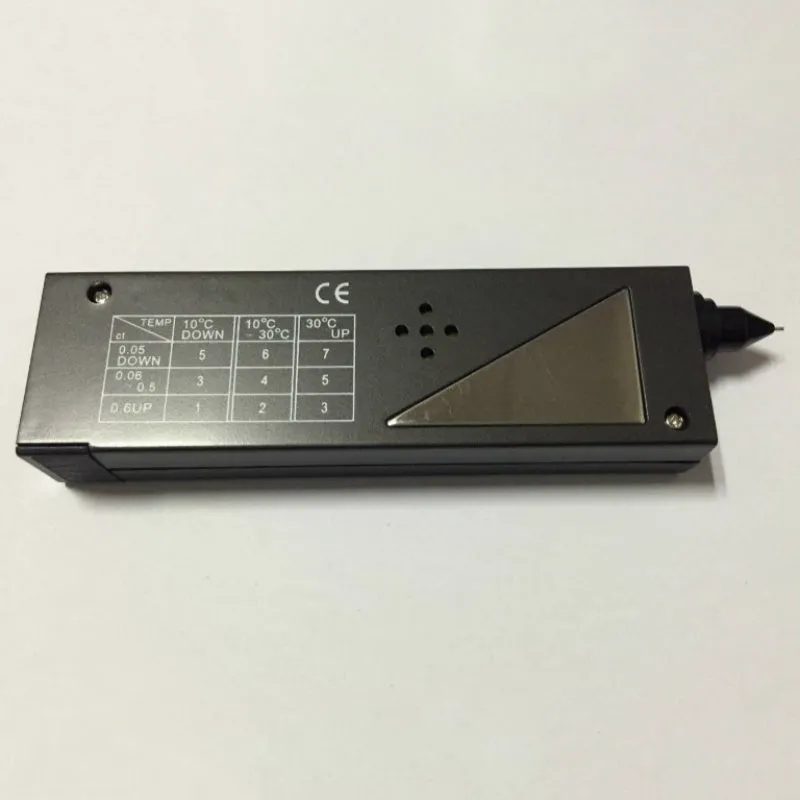
This second generation thermal conductivity meter offers a practical, portable method for verifying diamond authenticity. Designed for use by jewellers, gem traders, or serious collectors, the device provides an immediate on-site test that complements visual inspection. Its operation is based on measuring how efficiently heat passes through a material, a key physical property that differs between diamond and common simulants. With clear visual indicators and an audible signal, the tester delivers a straightforward result you can act upon, whether you're in a shop, at a trade show, or examining a personal collection.
Features and Construction

The tester's design prioritises portability and straightforward operation for its specific application in gem identification. Its construction and features are tailored to deliver a reliable test result in a compact format suitable for various settings.
Material and Build
The device is built using a combination of metal and engineering plastic. The metal components are critical for the test's function, forming the probe that contacts the gem and the rear plate that contacts your finger to complete the circuit. The engineering plastic housing encases the electronics and contributes to the overall light weight of 66 grams. This material choice makes the unit durable enough for regular handheld use while keeping it easy to carry.
Size and Practical Fit
With dimensions of 135 mm in length, 40 mm in width, and 23 mm in thickness, the tester is designed to fit comfortably in the hand. Its slim profile and lightweight nature mean it can be easily stored in a toolkit, desk drawer, or even a coat pocket. The 9V battery power supply eliminates the need for mains electricity, allowing for testing anywhere. The black colour provides a neutral, professional appearance suitable for both shop and field use.
Uses and Placement
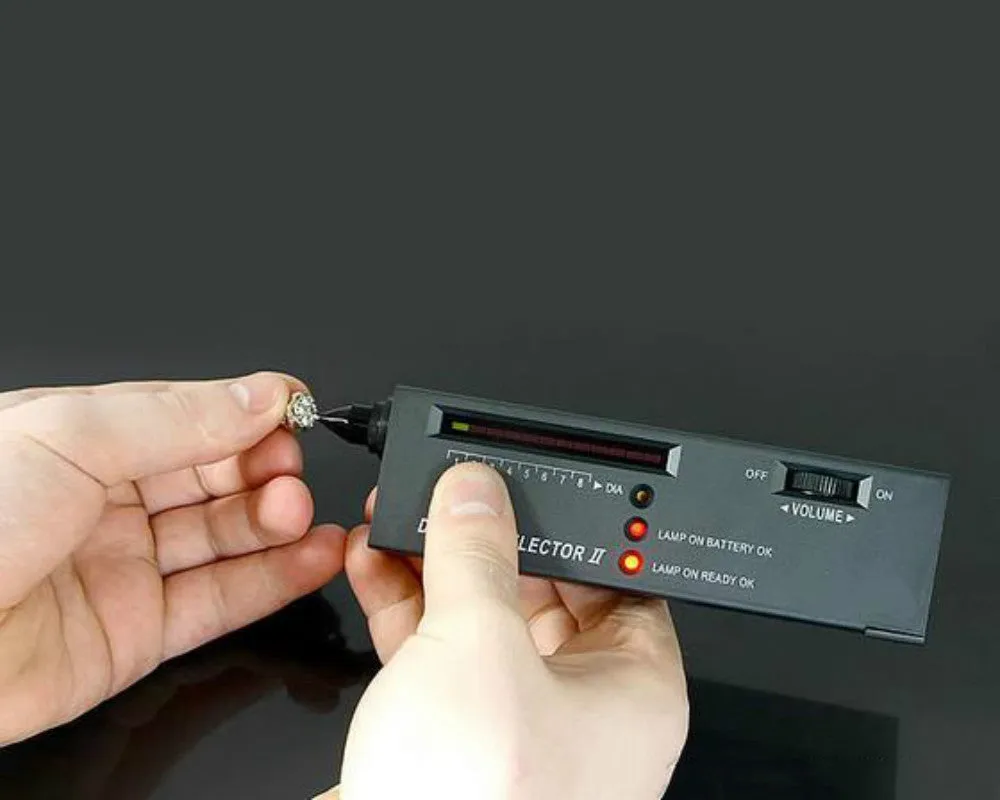
The primary and stated application for this instrument is diamond identification, with an additional mention of gem hardness testing. Its portability opens up several practical scenarios where immediate verification is valuable.
Event or Professional Use
For jewellery professionals, pawnbrokers, or gem traders, this tool serves as a first-line verification device. It can be used on the shop floor to quickly confirm a diamond's authenticity for a customer or when evaluating an item offered for sale. At trade fairs or auctions, its battery-powered operation allows for discreet checking of stones without needing access to a power outlet. The clear pass/fail signal—10 lit LEDs and a beep—provides an unambiguous result that can inform a buying, selling, or valuation decision.
Everyday Home Use
For the private collector or individual assessing inherited or previously owned jewellery, the tester offers a way to gain confidence about a stone's identity without immediately resorting to costly laboratory services. Its simple operation, requiring only contact between the probe, the gem, and your finger, makes it accessible for occasional use. The device can help organise a collection by confirming which pieces contain real diamonds, aiding in insurance documentation or simply providing personal certainty.
Benefits and Buying Value

The value of this thermal conductivity tester lies in its specific function, portability, and the practical clarity of its results. It addresses a particular need for on-the-spot gem verification.
Reuse and Low Maintenance
As a durable electronic tool, the tester is designed for repeated use over time. Maintenance is minimal, primarily involving battery replacement for the 9V power cell. The sturdy metal and plastic construction suggests it can withstand the handling typical of a workshop or retail environment. Its singular, focused purpose means it will remain a relevant tool for as long as thermal conductivity remains a key test for diamond identification.
Why Choose This Product
This second generation model represents an iteration likely aimed at refining the user experience from a previous version. The choice for a user comes down to needing a dedicated, portable instrument for this specific test. Compared to more complex lab equipment, it offers speed and location flexibility. Compared to purely visual or scratch tests, it provides a result based on a measurable physical property. For anyone regularly needing to distinguish diamond from common simulants like cubic zirconia or moissanite in a non-lab setting, this tool fills a clear and practical gap.

